Island Answers
Does Salt Air Shorten a Sub-Zero's Life?
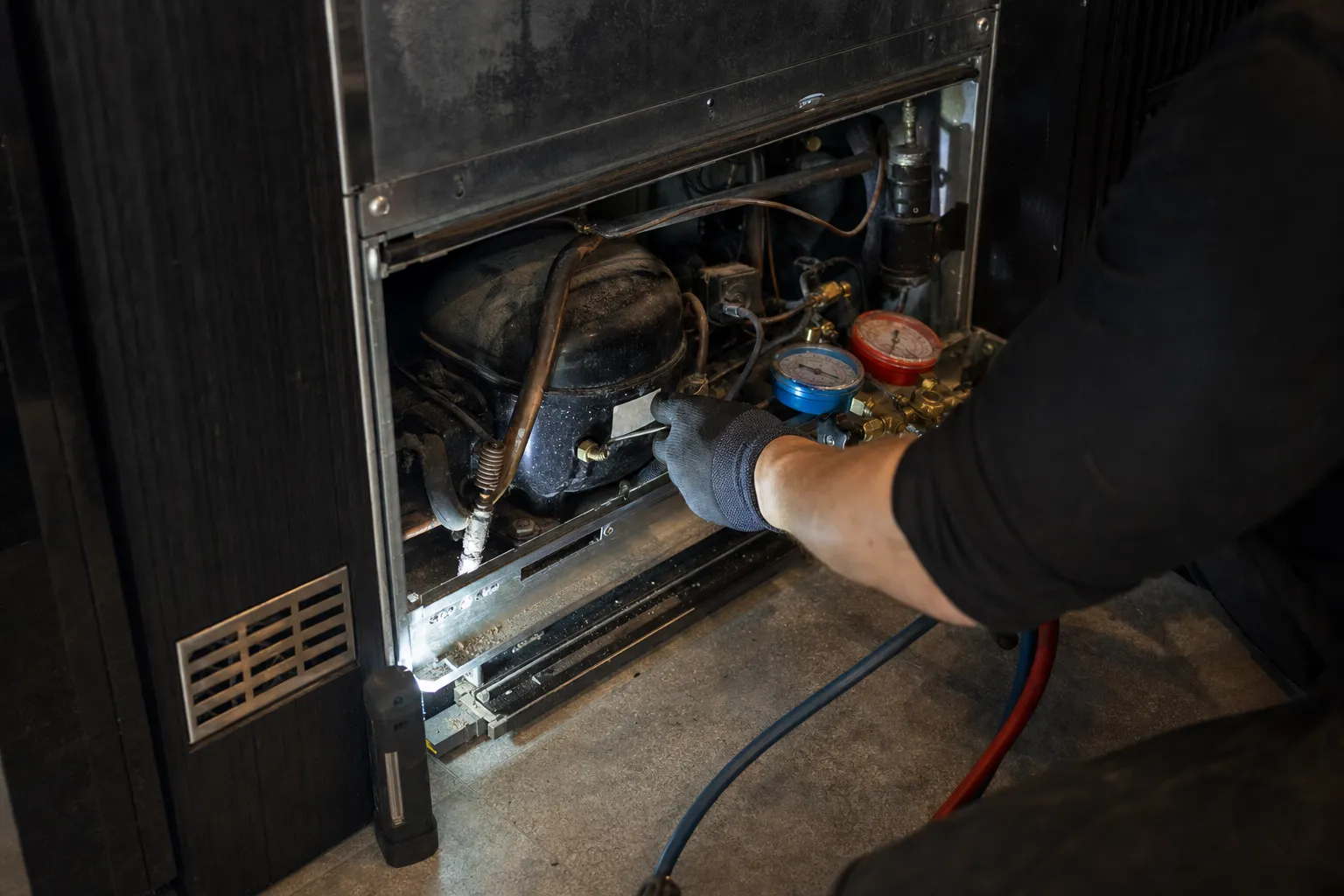
Sea air wears on the parts it reaches: the condenser fins, the grille fixings and the door gaskets. Looked after, those are parts that can be serviced or replaced, and the cabinet around them is not what gives out. Driftwood Appliance Service, (206) 785-2960, checks exactly those on an older unit.
Why the condenser takes the brunt
A fan pulls kitchen air across the condenser’s thin aluminium fins to shed the heat the unit removes. On the shore that air leaves a trace of salt behind, the damp keeps it wet, and aluminium corrodes in pits under wet salt. Dust alone only clogs; salt eats. Sub-Zero’s guides warn that skipping the condenser clean can lead to lost temperature, mechanical failure or damage.
What keeps an older unit going here
Brush the coil at the interval its own guide gives, and lean to the short end of it if you live on the water. Keep the gasket folds clean and dry. Have a grille screw that will not turn dealt with before it rounds off. None of that makes the salt go away; it keeps the salt working on replaceable parts rather than on the refrigeration system behind them.
- Written by
- Bjorn Aaltonen
- Trade
- Refrigeration technician, 15 yrs
- Holds
- EPA 608 certified
- Dated